

Part Two in a Six-Part Series Sharing What Every Nonprofit Leader Needs to Know to Win in a Data-Driven Funding World
Earlier in this series, I wrote about the difference between a person and a file. This time, Twelve Chairs is about the difference between a chair and a human being.
Somewhere last week, a case manager filed a note that says “Client attended a financial literacy seminar. 12 in attendance.” She’s doing exactly what the system asks of her – count the chairs. The problem is that the system is asking for the wrong thing.
Because here’s wh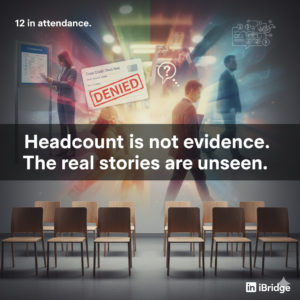 at that note doesn’t tell you. One of them leaves early every session due to a bus schedule that the organization hasn’t tracked. Three of them sit through a whole section on building credit that assumes they have a bank account — they don’t, they’ve been denied, and nobody asked in a way that made it safe to say so. Two of them stopped coming months ago. Their files show no follow-up. No outreach. No curiosity. They’re counted in the attrition rate, which is considered acceptable.
The program’s satisfaction survey scores 4.2 out of 5. You know when those surveys get completed? In the room. In front of the people who run the program. By clients who depend on that organization for services they cannot get anywhere else.
That is not a satisfaction score. That is a survival score.
I’ve spent thirty years watching institutions protect themselves from the truth their own people are trying to tell them. I built a company around that problem. I’m not done with it now.
The clients in that room knew exactly what the program missed. They had no structured way to say it. The organization had no structured way to hear it. And everyone went home, more or less, assuming the program was working.
That’s not a technology problem. That’s a will problem. The technology exists. The question is whether organizations are willing to ask questions they might not like the answers to.
Some are. That’s who I’m writing for.
David Childers
Chief Operating Officer
If this hits close to home — I’d like to hear about it.